
US Major Lotteries – Critical Jackpot Outlook for Thursday, December 4, 2025
Report Date: Thursday, December 4, 2025. When jackpots inflate, so do the myths. Tonight, the three major US multi-state games—Powerball, Mega Millions, and Lotto America—present a textbook example of how emotion and math diverge.
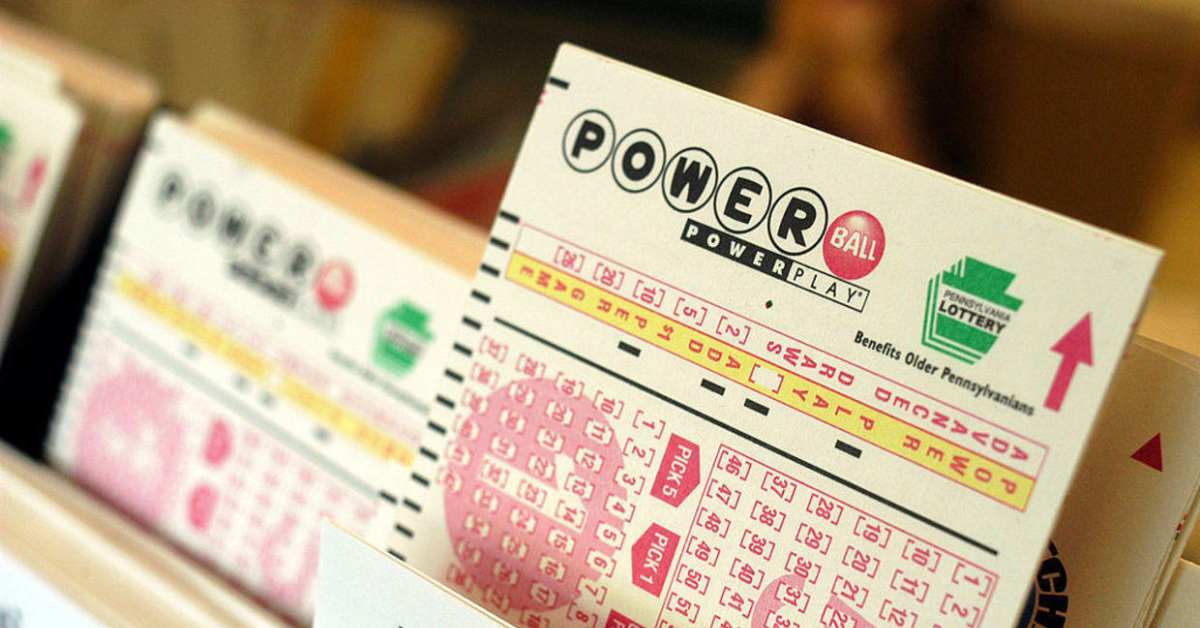
Powerball – A Volatile Giant at $841 Million
Current advertised jackpot: $841 million.
Powerball is in classic frenzy territory. A jackpot at $841M means one thing very clearly: the odds of winning have not improved; only the number of overconfident players has increased. With no winning numbers text (NUMBERS_TEXT) and no visual output (VISUAL_HTML) provided for this report, we cannot dissect the latest draw pattern—but that, in itself, is a useful reminder: most players obsess over the last combination, even though every future combination has the same probability.
Mathematically, Powerball remains brutally consistent:
- Odds of hitting the jackpot: approximately 1 in 292,201,338.
- Expected value for a single ticket remains negative, even at $841M, once taxes and annuity vs. cash are accounted for.
At this jackpot level, the real anomaly is not in the numbers drawn—it’s in player behavior. People start piling onto popular patterns: birthdays (1–31), calendar clusters, and visually pleasing sequences. That doesn’t make those numbers less likely to be drawn; it just makes them more likely to be shared if they do hit, slicing your payout.
If you want to treat Powerball as a speculative entertainment product rather than a financial strategy, use tools that at least help you manage crowding risk, not chase imaginary patterns. For deeper odds analysis, payout structures, and coverage tools, see Powerball Pro on NichebrAI.
Mega Millions – The Quiet Counterpoint at $50 Million
Current advertised jackpot: $50 million.
While Powerball hogs the headlines at $841M, Mega Millions at $50M is in what I’d call its statistically “boring” phase—boring to the public, not to the math. Again, no NUMBERS_TEXT or VISUAL_HTML is provided for this specific report, which means we can’t critique the latest draw pattern—but that’s almost the point: the specific last draw is irrelevant to your odds going forward.
- Odds of a Mega Millions jackpot: about 1 in 302,575,350, slightly worse than Powerball.
- At $50M, the crowd is thinner. Fewer tickets, fewer duplicated combinations.
From a rational perspective, a smaller Mega Millions pot with less player traffic can sometimes be better for a serious number strategist than a mega-jackpot with highly crowded number choices. If you do hit during a lower jackpot cycle, you’re less likely to split the prize with a dozen people who all played “lucky 7s” and birthdays.
For structured coverage planning, number frequency breakdowns, and crowd-avoidance strategies, use MegaMillions Pro on NichebrAI.
Lotto America – The Overlooked Underdog at $8.57 Million
Current advertised jackpot: $8.57 million.
Lotto America sits at $8.57M, a figure that most players mentally dismiss as “small” when compared with a $841M Powerball headline. That’s a mistake. The headline size of the jackpot is only one variable; the crowding factor is another, and it’s frequently ignored.
Again, no NUMBERS_TEXT or VISUAL_HTML is provided, so we can’t critique the last draw’s pattern distribution. But we can say this: in games like Lotto America, the lower public attention often means:
- Fewer total tickets sold.
- Less clustering around popular patterns.
- Better chance—conditional on winning—that you keep the prize to yourself.
From a probability lens, Lotto America is not a “cheap Powerball.” It’s a separate game with its own structure and crowd dynamics. Serious players looking for less competition per dollar spent should not ignore it.
Why the Missing Numbers Don’t Actually Matter
You might notice a theme in this report: the data fields for NUMBERS_TEXT and VISUAL_HTML are empty for all three games. That means we don’t have the latest winning combinations to visually display or dissect. In practice, this changes almost nothing about the analysis that actually matters:
- Every new draw is statistically independent of the last one.
- Patterns like “all evens,” “perfect spreads,” or “sequential runs” look suspicious to humans but are well within normal probability.
- Using last draw results to “predict” the next one is not strategy; it’s superstition dressed up as analysis.
The only rational use of historical results is to understand player behavior, not the machine. For example, if certain number ranges are consistently overplayed (birthdays, lucky 7s, repeating digit patterns), you can deliberately avoid them—not because they are less likely to be drawn, but because they are more likely to be shared if they do hit.
Expert Insight: “Smart Coverage” – Beat the Crowd, Not the Odds
Let’s be blunt: you are not going to bend the odds of Powerball (1 in ~292M) or Mega Millions (1 in ~303M). But you can influence what happens if you beat those odds. That’s where Smart Coverage comes in.
1. Avoid the Obvious Clusters
- Birthdays & dates: 1–31 are heavily overplayed. Spreading into 32–69 (Powerball) or 32–70 (Mega Millions) reduces the chance of sharing a jackpot.
- Pretty patterns: 5-10-15-20-25 or 7-17-27-37-47 look “clever” and are, therefore, crowded. They’re statistically normal, but socially popular.
2. Use the Full Field
For games like Powerball and Mega Millions, a surprisingly large share of tickets underuse the upper ranges. That’s an opportunity. A combination like 44-52-58-63-69 is no more or less likely to be drawn than a low-range set—but it’s less likely to be duplicated.
3. Think in Terms of Portfolios, Not Tickets
If you buy multiple tickets, don’t accidentally cluster your own numbers. Many players unknowingly repeat patterns across their plays (same core numbers, minor variation). You’re paying extra for overlapping coverage, which is mathematically wasteful.
A smarter approach is to treat your tickets like a diversified portfolio: cover different ranges, different odd/even balances, and avoid internal duplication.
4. Use Tools, but Demand Transparency
Any tool claiming to predict the next draw should be treated as entertainment only. What you actually want are tools that:
- Show how other players tend to choose numbers.
- Help you avoid crowded combinations.
- Optimize your coverage across the number space for the budget you’re willing to lose.
That’s the philosophy behind the NichebrAI suite. Instead of promising impossible predictions, it focuses on risk-aware coverage. Explore the full set of tools and plans at NichebrAI Plans, and game-specific analyzers like Powerball Pro and MegaMillions Pro.
The Real Story on December 4, 2025
On this report date—Thursday, December 4, 2025—the narrative is simple, but uncomfortable for most players:
- Powerball at $841M is a psychological magnet, not a rational investment.
- Mega Millions at $50M and Lotto America at $8.57M may offer less crowding and fewer split jackpots, conditional on the near-impossible event you win.
- The absence of visible winning-number patterns in this report is a reminder that your edge, if any, comes from understanding people, not the machine.
Play if you choose—but do it with your eyes open: the math is indifferent, the jackpots are seductive, and the only lever you control is how intelligently you choose to cover the number field.
Analyze these numbers with AI
Stop guessing! Use our Advanced AI Tool for this Game to find hot patterns.