
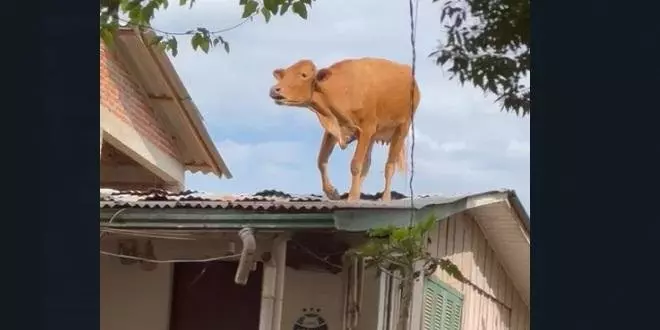
Why Does a Cow on a Roof Feel Like a Warning?
Be honest. A cow on a roof is funny for about one second.
Then your brain shifts.
Something feels off.
Not deep off.
Not poetic off.
Just wrong in a way that instantly gets your attention.
That reaction matters more than people think.
Because most of the time, life does not send problems with a dramatic speech.
It sends a small signal that looks strange, out of place, or slightly harder to ignore than usual.
A roof is where a roof belongs.
A cow is where a cow belongs.
Put them together, and the brain fires fast.
It does not need a long explanation.
It already knows enough to feel that something is unstable.
That is how a lot of real-world problems show up too.
A fee that feels a little too high.
A clause you did not expect.
A letter that looks routine until you open it.
A charge that technically “makes sense,” but still feels wrong in your gut.
A more familiar scene
Someone is standing in the kitchen late at night, looking at a bill, a notice, or a charge they did not fully see coming. Nothing looks dramatic. Nothing looks like a disaster. But something feels slightly wrong. And usually that is the moment when people realize they noticed the signal too late.
That does not mean people are careless.
It means most people are busy, tired, distracted, and used to moving fast.
They trust what looks normal until something crosses the line and breaks the pattern.
That is why the cow on the roof lands so quickly.
It is not just weird.
It is a clean visual version of the exact moment when the brain stops and says:
something here does not belong where it is.
And in real life, that moment often shows up around money, paperwork, risk, hidden costs, and decisions people thought were harmless when they moved past them the first time.
There’s a deeper layer behind that first reaction.
The Pattern Trap is a short companion guide on why people trust what looks familiar, ignore what feels “small” at first, and only slow down once a signal becomes too strange to miss.
Buyer note: includes a personal code for the first month of TrendPick.
The bigger lesson is simple.
People rarely miss warning signs because they are foolish.
They miss them because the first version does not look loud enough yet.
It looks normal enough to postpone.
Small enough to ignore.
Familiar enough to trust.
That same human habit shows up everywhere.
In bills.
In fine print.
In rushed decisions.
And yes, even in the way people build lottery lines from instinct, habit, and whatever feels right in the moment.
That is where NichebrAI comes in.
The platform is built around a simple idea:
what feels obvious first is not always what deserves the most trust.
Looking one layer deeper usually beats reacting to the first signal that grabbed your attention.
What changes when you stop brushing past the signal
- You notice what feels wrong before it turns into a bigger problem
- You give more attention to context instead of reacting on autopilot
- You stop trusting “it looked normal” as a full explanation
- You build better decisions by slowing down what first looked harmless
The cow on the roof works because it makes the signal impossible to miss.
Real life is usually quieter than that.
The warning is smaller.
The cost is less obvious.
The weirdness is easier to explain away.
And that is exactly why so many people move past it at first.
Sometimes what grabs your attention is not random.
Sometimes it is the brain noticing a pattern break before you have found the words for it.
That does not mean panic is useful.
It means paying attention earlier often is.
The smarter move is not becoming paranoid.
It is becoming slightly harder to rush.
Slightly harder to wave something off.
Slightly better at asking why this feels off before the cost of ignoring it gets bigger.
Some signals look absurd for a reason.
The point is not the cow.
The point is how fast your brain knew something was out of place.
That same instinct shows up in real decisions all the time.
The only difference is that real life usually makes the signal easier to ignore.
NichebrAI is built for analysis and exploration. It does not provide legal or tax advice, and it does not guarantee financial or lottery outcomes.