
Why Do Familiar Things Look So Strange Out of Place?
Some images feel strange without feeling dramatic.
This is one of them.
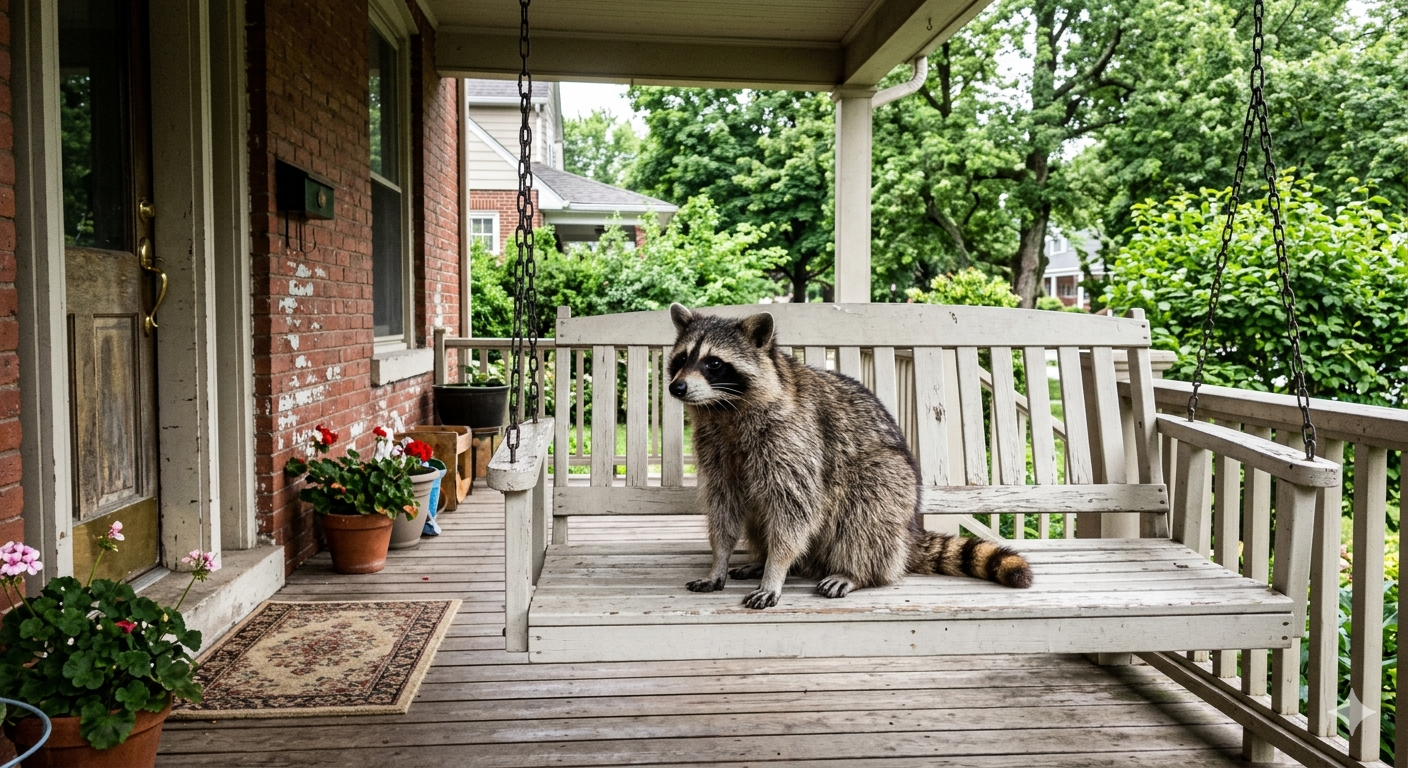
A raccoon on a porch swing is not shocking.
It is just wrong in a very calm way.
The swing belongs there.
The house belongs there.
Even the relaxed posture makes sense for the scene.
The only thing that does not belong is the animal using the space like it lives there.
That is why the image sticks.
It borrows the shape of something familiar, then bends it just enough to make the brain pause.
Not because it is chaotic.
Because it feels almost normal.
A lot of human choices work the same way.
We lean faster toward what already feels known.
A number we have used before.
A line that looks clean.
A pattern that feels comfortable enough to trust before it has really earned that trust.
When familiar starts to feel trustworthy
It is getting close to draw time. Someone opens the app, lands on a few numbers they have used before, keeps them because the line feels comfortable, swaps one because it looks cleaner, and moves on without really checking whether that sense of confidence came from anything deeper.
That is the trap.
Familiar does not always mean better.
It just means the brain has to work less to accept it.
And when something feels easy to accept, it often feels more reliable than it really is.
That is why scenes like this stay in the head.
They are close enough to normal to feel believable, but off enough to demand attention.
The same thing happens when people lean too hard on habits that feel right just because they feel known.
The real advantage starts when familiar stops being enough by itself.
Comfort can help you notice something.
It should not be the only reason you trust it.
This idea goes a little further.
The Pattern Trap is a short companion guide on why familiar choices feel safer than they really are, how repetition gets mistaken for strength, and how a better process starts to replace that reflex.
Buyer note: includes a personal code for the first month of TrendPick.
NichebrAI helps take that extra step.
Instead of settling for whatever feels most comfortable at first glance, the platform lets you explore draw history, number behavior, delays, sequences, hot and cold patterns, and AI-assisted analysis built around real lottery data.
What changes when familiarity is not your only filter
- You stop trusting a line just because it feels comfortable
- You can check real draw history before settling on numbers
- You can review delays, sequences, and patterns with more context
- You move from recycled habits to a more informed workflow
That is the real shift.
Not magic.
Not hidden signals.
Not fake certainty dressed up as strategy.
Just a better process than trusting whatever feels most natural at first glance.
The raccoon on the porch swing feels strange because it borrows the shape of a normal scene without actually being one.
A lot of human choices work like that too.
Something feels safe.
Something feels known.
And that feeling quietly gets mistaken for stronger judgment.
If you are going to explore numbers anyway, it makes sense to use something better than repeated habits, recycled favorites, and whatever looks comfortable in the moment.
The free version lets you test the platform.
And if you want more depth, more AI usage, and a more complete workflow, the paid plans take you further.
Familiar is not the same thing as strong.
Sometimes it just means your brain accepted it faster.
The smarter move is checking whether that comfort came from real context or just repetition.
NichebrAI is built for analysis and exploration. It does not guarantee winning outcomes.